
3 in 4 Homeowners Aren’t Sure What Their Insurance Covers or When to Claim

Key Takeaways
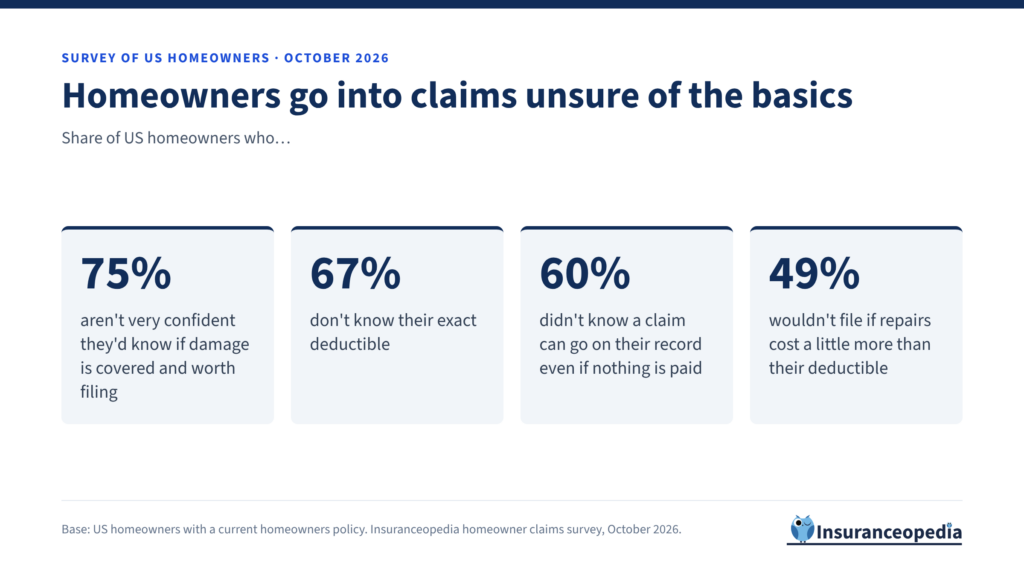
Nearly 60% of homeowners didn’t know a claim could appear on their insurance record even if the insurer pays nothing
Two in three homeowners didn’t know their exact deductible, including 24% who didn’t know it at all
While homeowners buy insurance to protect themselves from unexpected repair costs, many aren’t sure what their policy covers or when a claim is worth filing. For some, that means facing a repair bill without knowing how much help they can expect from their insurer.
According to Insuranceopedia’s Homeowner Claims Survey of 700 insured U.S. homeowners, three in four weren’t fully confident they would know whether damage was covered and worth claiming for. The survey also found surprising gaps in homeowners’ understanding of what happens after filing and how much they would need to pay themselves.
Nearly 60% Don’t Know a Claim Can Stay on Their Record Even if It Pays Nothing
Knowing you have home insurance and understanding when to use it are two different things. Between coverage limits, exclusions and deductibles, homeowners may only discover what their policy will pay for when the damage is already done and repair bills are waiting.
To better understand how homeowners make these decisions, Insuranceopedia surveyed 700 insured U.S. homeowners and found that only one in four (25%) were very confident they would know whether damage was covered and worth claiming for. Another 58% were somewhat confident, while 17%, or nearly one in five, were not very confident or not confident at all.
The survey also found that many homeowners don’t know what happens after filing. Nearly 60% were unaware that a claim can appear in their insurance claims history even if the insurer pays nothing.
Commenting on the findings, Bob Phillips, licensed insurance agent, said: “That means a homeowner could be left paying the full repair bill while still having a claim on their record. Checking what the policy covers before filing can help them understand whether their insurer is likely to pay and whether a claim is worth making.”
Two in Three Homeowners Don’t Know Their Exact Deductible
The survey also found surprising gaps in homeowners’ understanding of what they would need to pay themselves. Across all 700 respondents, only 33% knew their exact deductible. Another 43% knew it roughly, while 24% didn’t know it at all. In other words, two in three homeowners didn’t know the exact amount they would have to pay themselves when making a claim.
Without knowing that amount, it’s harder to work out how much of the repair bill would come out of their own pocket. When asked whether they would file a claim for repairs costing only a little more than their deductible, 49% said no, 26% weren’t sure, and only 25% said they would file.
For those unsure what to do, understanding how much their insurer might pay is an important starting point, and one of the reasons Insuranceopedia created Claims Assistant.
“Homeowners shouldn’t have to file a claim just to find out whether their insurance will help,” said Max Coupland, CEO of Insuranceopedia. “We created Claims Assistant to help them understand what their policy covers, how much they would need to pay themselves and whether a claim is worth making. Sometimes that means telling them they’re better off not filing.”
The tool checks the damage against the homeowner’s coverage. If they decide to file, it also helps prepare the paperwork and track deadlines, giving them support from the first coverage check through to submitting the claim.
With only one in four homeowners very confident about what’s covered and worth claiming for, the findings show why clearer explanations are needed before damage happens, not when repair bills are already waiting.
Methodology
Insuranceopedia surveyed 700 U.S. homeowners with current homeowners insurance through Pollfish on October 9, 2026. Results are unweighted and self-reported. The reported margin of error at 95% confidence is ±3.7 percentage points overall. Smaller-group findings should be treated as directional.
About Jastra Kranjec
Jastra is a data-driven PR specialist with 20+ years of experience across journalism, public relations, and content strategy, specializing in research and report writing.